
Burst Pipe: What To Do Next
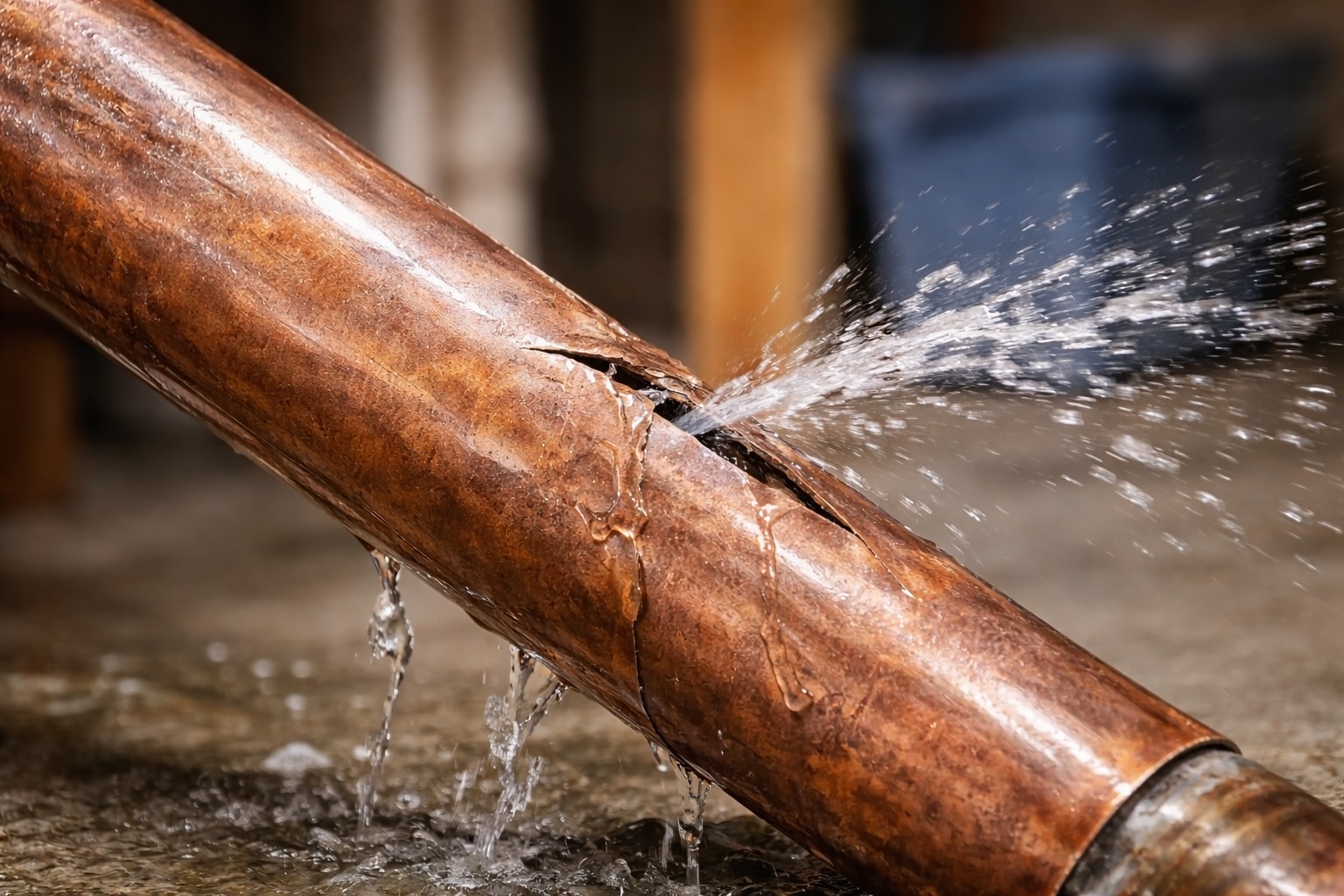
Burst pipe
A sudden burst pipe can release hundreds of gallons of water into your home in a short amount of time, causing extensive damage to drywall, flooring, insulation, furniture, and personal belongings. Because water spreads quickly and can become trapped behind walls and beneath flooring, responding immediately is essential to minimizing damage and reducing the risk of mold growth.
Whether your home has experienced a frozen pipe burst during winter, a broken water supply line, or a plumbing failure that has caused indoor flooding, taking the proper steps as soon as it is safe to do so can help protect your property and reduce restoration costs.
Common Causes of Burst Pipes
Burst pipes can happen for a variety of reasons, including:
Freezing Temperatures
-
Water inside pipes freezes and expands, creating pressure that can cause pipes to crack or burst.
Aging or Corroded Pipes
-
Older plumbing systems may weaken over time due to corrosion, rust, or normal wear and tear.
Excess Water Pressure
-
Water pressure that is too high can place excessive stress on pipes, fittings, and plumbing connections.
Clogged Pipes or Blockages
-
Severe clogs can increase pressure within the plumbing system, potentially causing pipes to fail.
Poor Installation or Shifting Pipes
-
Improperly installed plumbing or movement caused by foundation settlement can weaken pipe connections and increase the risk of leaks or bursts.
Appliance or Fixture Failures
-
Damaged water supply lines connected to washing machines, refrigerators, dishwashers, sinks, toilets, or water heaters can suddenly rupture and cause significant water damage.
Understanding what caused the pipe to burst is an important first step in preventing future plumbing failures. If your home has experienced a burst pipe, professional water extraction and structural drying should begin as soon as possible to help minimize damage and restore your property.
Step One: Stay safe
Your safety should always come first after discovering a burst pipe. Water can create serious electrical hazards and may conceal slippery surfaces or other dangerous conditions inside your home.
- Avoid standing water near electrical outlets, appliances, or exposed wiring.
- If it is safe to do so, turn off power to the affected area at the breaker panel.
- Never touch electrical equipment while standing in water.
- Shut off the main water supply as soon as possible to stop additional flooding, if you can safely access the shutoff valve.
- Keep children and pets away from affected areas until the water has been removed and the area is safe.
Once the immediate hazards have been addressed, you can begin taking steps to protect your property and limit further water damage.
Step two: stop water source immediately
Once it is safe to do so, your next priority is to stop the flow of water. Quickly shutting off the water supply can help minimize damage to your home and reduce the amount of water that must be removed during the restoration process.
-
Shut off your home's main water supply valve to stop additional water from entering the plumbing system.
-
If the main shutoff valve is not accessible, locate and close the emergency shutoff valve for the affected fixture or appliance, if possible.
-
Open faucets throughout the home to help drain any remaining water and relieve pressure within the plumbing system.
-
If the burst pipe is visible, avoid attempting repairs unless you can do so safely. A temporary repair may help limit water loss until a licensed plumber can make permanent repairs.
-
Take steps to prevent additional water from spreading to unaffected areas whenever it is safe to do so.
Stopping the water source as quickly as possible can significantly reduce water damage, lower restoration costs, and help protect your home from additional structural damage and mold growth.
step three: remove valuable content
After the water supply has been shut off and it is safe to enter the affected area, move valuable belongings away from standing water as quickly as possible. The sooner contents are removed, the better the chance of preventing permanent damage and reducing restoration costs.
-
Relocate furniture, electronics, and appliances to a dry area whenever possible.
-
Remove important documents, photographs, keepsakes, and other irreplaceable items from affected rooms.
-
Move rugs, carpeting, and other textiles away from standing water to help limit damage.
-
Relocate storage boxes, seasonal decorations, and household belongings to a clean, dry location.
-
Separate wet items from dry items to help prevent moisture from spreading.
-
Take photos of damaged belongings before disposing of anything for insurance documentation.
Promptly removing and protecting your belongings can improve the chances of successful content cleaning and restoration while helping minimize additional damage caused by prolonged moisture exposure.
Click here for our Content Cleaning Services
step four: document the damage
Before cleanup and restoration begin, thoroughly document the damage caused by the burst pipe. Proper documentation can help support your insurance claim and provide a clear record of the extent of the water damage.
-
Take photos of all affected rooms, standing water, and damaged building materials.
-
Record videos showing the extent of the water damage throughout your home.
-
Photograph the burst pipe or the location of the plumbing failure, if it is safe and visible.
-
Document damaged furniture, electronics, appliances, flooring, and other personal belongings.
-
Create a list of damaged contents and note any visible damage.
-
Save receipts for emergency repairs, temporary protective measures, or cleanup expenses.
Accurate documentation can help streamline the insurance claims process and ensure that both structural damage and damaged personal belongings are properly evaluated during restoration and insurance inspections.
Click here for our Insurance Guide
step five: contact insurance company
After documenting the damage, contact your insurance company as soon as possible to report the loss and begin the claims process. In many cases, sudden and accidental burst pipe damage may be covered under a homeowners insurance policy, but coverage depends on the specific terms, conditions, and endorsements of your policy.
Potential Coverage May Include:
-
Damage to your home's structure (dwelling coverage)
-
Damage to furniture, electronics, clothing, and other personal belongings (personal property coverage)
-
Professional water mitigation and restoration services
-
Temporary living expenses (loss of use) if your home becomes uninhabitable during repairs
Potential Exclusions May Include:
-
Damage caused by long-term leaks or ongoing water intrusion
-
Neglect, deferred maintenance, or preventable plumbing issues
-
Damage resulting from a failure to maintain adequate heat during freezing conditions, depending on policy terms
Be sure to provide your insurance company with photos, videos, and a detailed inventory of damaged property. Keep records of all communications and ask questions about your deductible, coverage limits, and any documentation they may require.
Coverage varies by policy. Reviewing your homeowners insurance policy with your insurance representative can help you better understand your coverage before an emergency occurs.
Click here to see our Insurance Guide
step six: call a restoration company
After the water supply has been shut off, contact a professional restoration company as soon as possible. While removing standing water is an important first step, moisture can quickly spread behind walls, beneath flooring, inside insulation, and into other hidden areas where it cannot be seen. Without proper drying, this hidden moisture can lead to additional damage, unpleasant odors, and mold growth.
Professional restoration services typically include:
-
Water Extraction: Rapid removal of standing water using professional-grade extraction equipment to help minimize further damage.
-
Moisture Mapping and Detection: Advanced moisture meters and thermal imaging are used to locate hidden moisture behind walls, under flooring, and within structural materials.
-
Structural Drying and Dehumidification: Industrial air movers and dehumidifiers thoroughly dry the affected areas and help stabilize building materials.
-
Mold Prevention: Prompt drying and antimicrobial treatments, when appropriate, help reduce the risk of mold growth after water damage.
-
Cleaning and Sanitization: Affected areas are cleaned and sanitized as needed to help restore a safe and healthy indoor environment.
Because water from a burst pipe can spread quickly throughout a home, professional water mitigation should begin as soon as possible. Early intervention can help reduce restoration costs, preserve building materials, and improve the chances of restoring your home to its pre-loss condition.
How quickly can water damage Happen from a burst pipe?
A burst pipe can release a large amount of water in a matter of minutes, allowing moisture to spread rapidly throughout your home. The sooner water extraction and structural drying begin, the better the chances of minimizing damage and preventing costly repairs.
Within Minutes
-
Water can rapidly flood rooms and surrounding areas.
-
Flooring, carpeting, and furniture begin absorbing water.
-
Personal belongings may become damaged.
-
Water starts spreading to adjacent rooms and lower levels of the home.
Within Hours
-
Drywall, insulation, wood flooring, and baseboards begin absorbing moisture.
-
Water migrates behind walls, beneath flooring, and into other hidden areas.
-
Cabinets, trim, and other building materials may begin to swell or warp.
-
The longer water remains, the more difficult it becomes to restore affected materials.
Within 24–48 Hours
-
Mold and mildew growth may begin to develop.
-
Musty odors can start to appear.
-
Hidden moisture may continue spreading throughout the structure.
-
Some building materials may become increasingly difficult to salvage.
Within Several Days
-
Structural materials may weaken or deteriorate.
-
Extensive mold growth can spread throughout affected areas.
-
Drywall, insulation, flooring, and other materials may require removal and replacement.
-
Restoration costs often increase as damage becomes more extensive.
Prompt water extraction, moisture detection, and structural drying are essential to minimizing damage, reducing the risk of mold growth, and restoring your home as quickly as possible.
signs of hidden water damage
Not all water damage is immediately visible after a burst pipe. Even after standing water has been removed, moisture can remain trapped inside walls, flooring, insulation, and other building materials. Identifying these warning signs early can help prevent more extensive damage and mold growth.
Common signs of hidden water damage include:
-
Bubbling, peeling, or blistering paint
-
Musty or persistent odors
-
Warped, buckled, or swollen flooring
-
Soft, stained, or deteriorating drywall
-
Water stains or discoloration on walls and ceilings
-
Damp insulation or wet building materials
-
Visible mold or mildew growth
-
Increased indoor humidity or condensation
-
Areas that remain damp long after the water appears to be gone
If you notice any of these warning signs after a burst pipe or plumbing leak, professional moisture detection and structural drying can help identify hidden moisture, prevent additional damage, and restore your home safely.
Can insurance cover burst pipe damage?
Many homeowners insurance policies may provide coverage for water damage caused by a sudden and accidental burst pipe, but the extent of coverage depends on your individual policy, endorsements, and the circumstances surrounding the loss.
Potential Coverage May Include:
-
Sudden and accidental water damage caused by a burst pipe
-
Damage to your home's structure and building materials
-
Damage to personal belongings and household contents
-
Professional water mitigation, structural drying, and restoration services
-
Temporary living expenses if your home becomes uninhabitable during repairs
Potential Exclusions May Include:
-
Long-term leaks or ongoing water intrusion
-
Damage resulting from neglect, deferred maintenance, or failure to repair known plumbing issues
-
Frozen pipe damage if reasonable steps were not taken to protect the plumbing system, depending on your policy
-
Water damage resulting from causes specifically excluded under your homeowners insurance policy
If your home has experienced a burst pipe, notify your insurance company as soon as possible, document the damage thoroughly, and keep records of any emergency mitigation services performed.
Coverage varies by policy. Reviewing your homeowners insurance policy with your insurance representative can help you better understand your coverage, deductibles, and any applicable limitations before an emergency occurs.
our burst pipe cleanup process
At Damage Control, we follow a proven restoration process designed to quickly stop further damage, thoroughly dry your property, and restore your home to its pre-loss condition as efficiently as possible.
1. Emergency Response and Damage Assessment
Our team responds quickly to assess the damage, identify affected areas, and develop a customized restoration plan based on the extent of the water intrusion.
2. Water Extraction
Standing water is removed using professional-grade extraction equipment to help minimize damage to flooring, drywall, furniture, and other building materials.
3. Moisture Mapping and Detection
Advanced moisture meters and thermal imaging technology are used to locate hidden moisture behind walls, beneath flooring, inside ceilings, and within structural components.
4. Structural Drying and Dehumidification
Industrial air movers and dehumidifiers are strategically placed to thoroughly dry the structure, stabilize building materials, and help prevent secondary damage.
5. Mold Prevention and Sanitization
Affected areas are cleaned and treated as needed to help reduce the risk of mold growth and maintain a clean, healthy indoor environment.
6. Contents Cleaning and Restoration
Whenever possible, salvageable furniture, and personal belongings are cleaned, dried, deodorized, and restored using professional content restoration techniques.
7. Repairs and Reconstruction
After mitigation is complete, our experienced reconstruction team repairs or replaces damaged drywall, flooring, trim, cabinetry, ceilings, and other structural components to restore your home.
8. Remodeling and Home Improvements
If you're planning to update your space, we also provide kitchen, bathroom, basement, and whole-home remodeling services. Whether Damage Control completed the initial mitigation or you're simply looking for a trusted contractor for the reconstruction phase, our remodeling team is ready to help.
Our goal is to minimize damage, reduce restoration costs, and restore your home safely, efficiently, and professionally following a burst pipe or plumbing emergency.
If your home has experienced a burst pipe, don't wait for water damage to spread or hidden moisture to cause mold growth. Damage Control provides 24/7 emergency water extraction, moisture detection, structural drying, mold prevention, and reconstruction services throughout Southeast Wisconsin. Our experienced team responds quickly to minimize damage, reduce restoration costs, and restore your home to its pre-loss condition. Contact Damage Control today for fast, professional burst pipe cleanup and water damage restoration services.

Fast and complete response from Damage Control! Last January our basement flooded on a Friday night. Our sump pump discharge froze pipe froze, resulting in tripping the sump pump GFCI, and frying our back up battery sump pump. The team from Damage Control responded promptly and worked until all water was removed from our basement and helped drying out our belongings.
Water Damage Restoration Services
Mold Restoration Services
Preventing Mold Growth
Emergency Water Removal Brookfield
Water Damage Restoration Brookfield
Water Damage Restoration Menomonee Falls
Water Damage Restoration Muskego
Water Damage Restoration New Berlin
Water Damage Restoration Oconomowoc
Water Damage Restoration Pewaukee
Water Damage Restoration Waukesha
Flooded Basement Cleanup Waukesha
Flooded Basement Guide
Why Basements Flood