
Fall Storm Damage Prevention:
Fall weather in Southeast Wisconsin can bring strong winds, heavy rain, thunderstorms, and occasionally early snow or ice. These changing conditions can put your roof, trees, outdoor belongings, and home's exterior at risk. Preparing before severe weather arrives can help reduce the chance of property damage and give your household more time to respond safely.
Use this fall storm damage prevention checklist to prepare your home for seasonal storms. A few routine inspections and simple precautions can help protect your property from wind damage, falling branches, roof leaks, and water intrusion.
Fall Storm Damage Prevention:
Fall Storm Monitoring
As temperatures begin to cool, fall weather in Southeast Wisconsin can bring strong winds, heavy rain, thunderstorms, and occasionally early snow or ice. Monitor local forecasts during periods of severe weather and pay attention to watches and warnings. Check forecasts before outdoor projects or travel, especially when storms are expected to move through the area.
Weather Alert Readiness
Enable emergency weather alerts on your phone and make sure other household members know how to receive warnings. Keep a battery-powered weather radio available in case of power outages. Identify a safe place in your home, such as a basement or small interior room on the lowest floor, where your family can shelter during a tornado warning.
Family Emergency Planning
Review your household emergency plan before severe weather season. Keep flashlights, batteries, a first-aid kit, drinking water, essential medications, and phone chargers in an accessible location. Make a plan for pets and consider how you will communicate if family members are separated during a storm.
Protecting Your Property From Wind Damage
Outdoor Item Securing
Before strong winds arrive, secure or store patio furniture, grills, planters, umbrellas, decorations, and other loose outdoor items. Close and secure sheds, gates, and garage doors. Lightweight objects can become airborne during high winds and damage siding, windows, vehicles, or neighboring property.
Tree Limb Risk Reduction
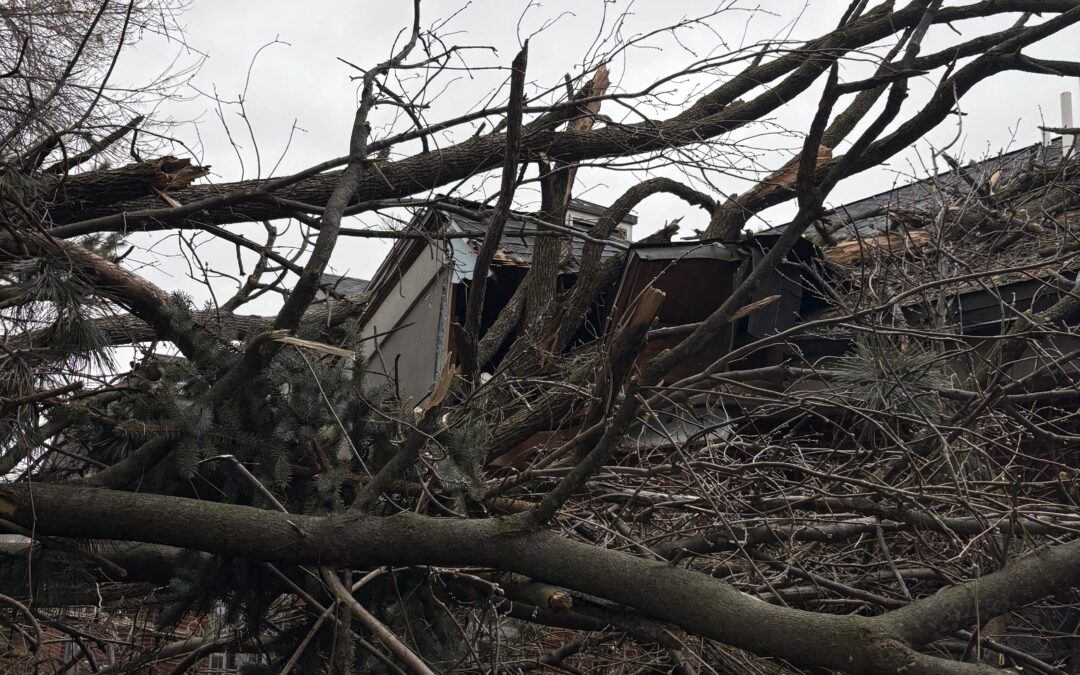
Inspect trees around your property for dead, cracked, or weakened branches that could fall during high winds or early snowfall. Pay particular attention to limbs hanging over your roof, driveway, walkways, and power lines. Arrange for hazardous branches to be removed by a qualified tree care professional. Never attempt to remove limbs that are near electrical lines.
Garage Doors, Fences & Outdoor Structures
Check garage doors, fences, gates, sheds, and other outdoor structures for loose hardware, damaged panels, or unstable supports. Secure items that could shift or blow away during strong winds. Address existing damage before the weather becomes more severe.
Roof & Water Damage Prevention Before Winter
Roofline Inspection
Before winter arrives, inspect your roof from the ground for missing or damaged shingles, loose flashing, damaged vents, and other visible problems. Check attic spaces and ceilings for water stains or signs of leaks. Address roof damage before freezing temperatures and winter precipitation make repairs more difficult. Avoid climbing onto the roof; contact a qualified roofing professional if you suspect damage.
Gutters and Downspouts
Clear leaves, twigs, and other debris from gutters and downspouts so rainwater can drain properly. Check for loose sections, leaks, and areas where water spills over the edge. Make sure downspouts direct water away from your foundation. Clogged drainage systems can contribute to roof leaks, soil erosion, and basement water intrusion during fall storms.
Basement and Foundation Drainage
Check foundation areas, basement windows, and window wells for cracks, debris, or places where water collects. Make sure the ground slopes away from your home and that sump pumps and discharge lines are working properly. Taking care of drainage issues before periods of heavy rain can help reduce the risk of basement flooding.
What to Do After Fall Storm Damage
Even with preparation, strong fall storms can damage roofs, siding, windows, trees, and other parts of your property. If your home is affected, take these steps:
Check for immediate hazards. Stay away from downed power lines, unstable trees, damaged structures, and flooded areas with possible electrical hazards.
Wait for conditions to become safe. Do not inspect damaged areas during an active storm or climb onto a damaged roof.
Prevent additional damage when possible. If it is safe, move belongings away from leaks and use appropriate temporary protection. Leave hazardous repairs to qualified professionals.
Document the damage. Take photos and videos from a safe location for your insurance records.
Contact your insurance company. Report the damage and ask about the next steps for your claim.
Arrange professional assistance. If water has entered your home, prompt water removal and proper drying can help limit additional damage.
For significant roof, structural, or electrical damage, contact the appropriate qualified professional before attempting repairs.
Fall Storm Damage Prevention
Fall storms can bring strong winds, heavy rain, and changing temperatures to Southeast Wisconsin. Securing outdoor belongings, checking trees, maintaining gutters, and inspecting your roof can help reduce the risk of property damage before winter arrives.
If a storm damages your home or causes water to enter your property, Damage Control Inc. provides professional storm and water damage restoration services throughout Southeast Wisconsin. Contact our team for help assessing the damage and restoring your home.
